
The rapid growth of electric vehicles in the UK is reshaping conversations across the automotive aftermarket, with a lot of focus being aimed at high-voltage battery packs and drivetrain technology. For suppliers operating in electrical and engine management categories, the reality is more nuanced.
Despite the rise of electrification, there’s still very much a strong demand for more traditional electrical components:
Low-Voltage Systems Remain Critical
Even fully electric vehicles still rely on 12V low-voltage systems with the likes of Tesla also implementing a 16V lithium-ion solution in order to further save weight, improve efficiency & reliability as well as provide more power.
Whilst the high-voltage system found in an EV is primarily used to power the drivetrain, a low-voltage system is still needed to power such things as:
– The ECU, or ‘brain’ of the vehicle
– Critical safety & security systems e.g. ABS, ADAS, Power Steering, Reversing Cameras
– Infotainment / radio & sound system
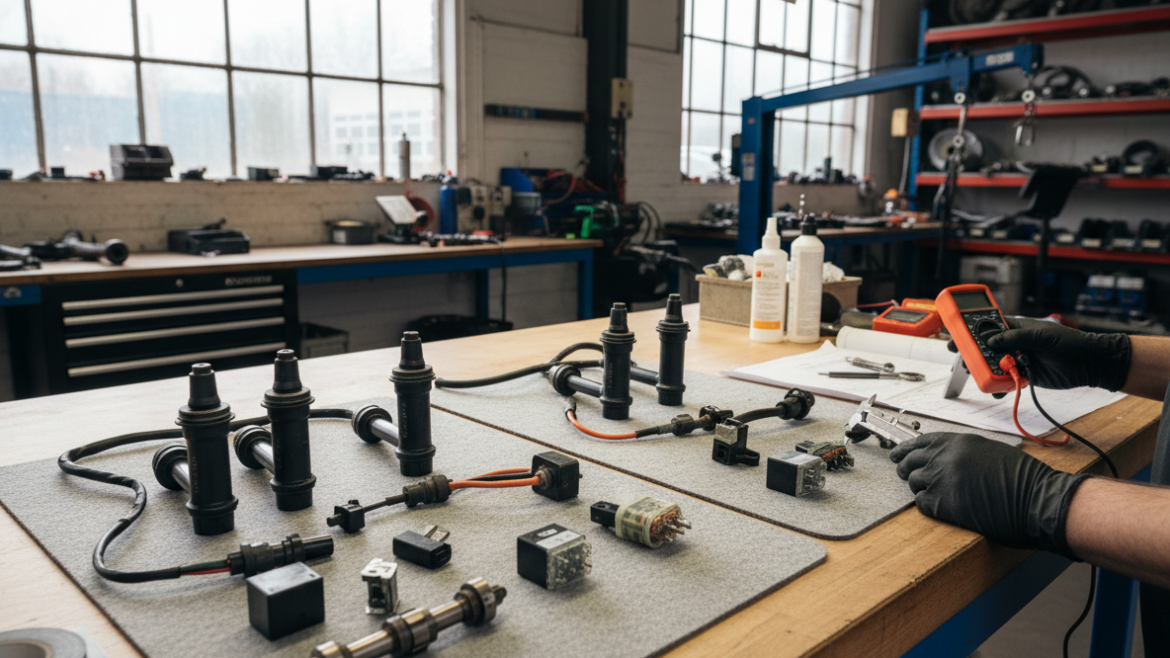
– Auto Electrical components: Lights, Horn, Relays, Sensors, Wipers
In turn, traditional battery terminals and other associated electrical connectors & components will continue to require replacement as corrosion and vibration take its toll.
There is talk of moving new electric and hybrid vehicles over to a 48V low-voltage system which will better accommodate these power-hungry machines but for now, the demand for 12V components is still very much alive and thriving!
Sensor Proliferation in Modern Platforms
Modern vehicles seem to have a sensor for everything and this is even more prolific when it comes to electric vehicles. Advanced braking systems, regenerative control systems and traction management depend on accurate sensor data to perform correctly.
Even minor signal inconsistencies can trigger warning lights or performance limitations and as diagnostic sophistication increases – the demand for high-quality replacement sensors becomes even more critical.
Thermal Management Is Expanding
Thermal stability is vital in all vehicles but even more so in EVs where systems such as fast-charging can generate a lot of heat, very quickly – batteries and other critical systems need to be kept at optimal temperature for maximum efficiency and longevity.
Thermal management systems are critical for regulating the temperature of various components including: battery packs, the electric motor and power electronics. Most modern EVs use a liquid cooling system which is circulated using a pump but some older, or more budget-friendly models still use a more traditional air-cooling solution.
The EV transition strengthens the importance of reliable low-voltage electrical systems and precision sensor replacement; suppliers positioned as auto-electrical specialists will still remain highly relevant in the electrified era.
If you’re in the trade, feel free to contact us today atsales@currentcare.co.uk or +44(0)1254 300730 and our team will be happy to help with your auto electrical needs!