
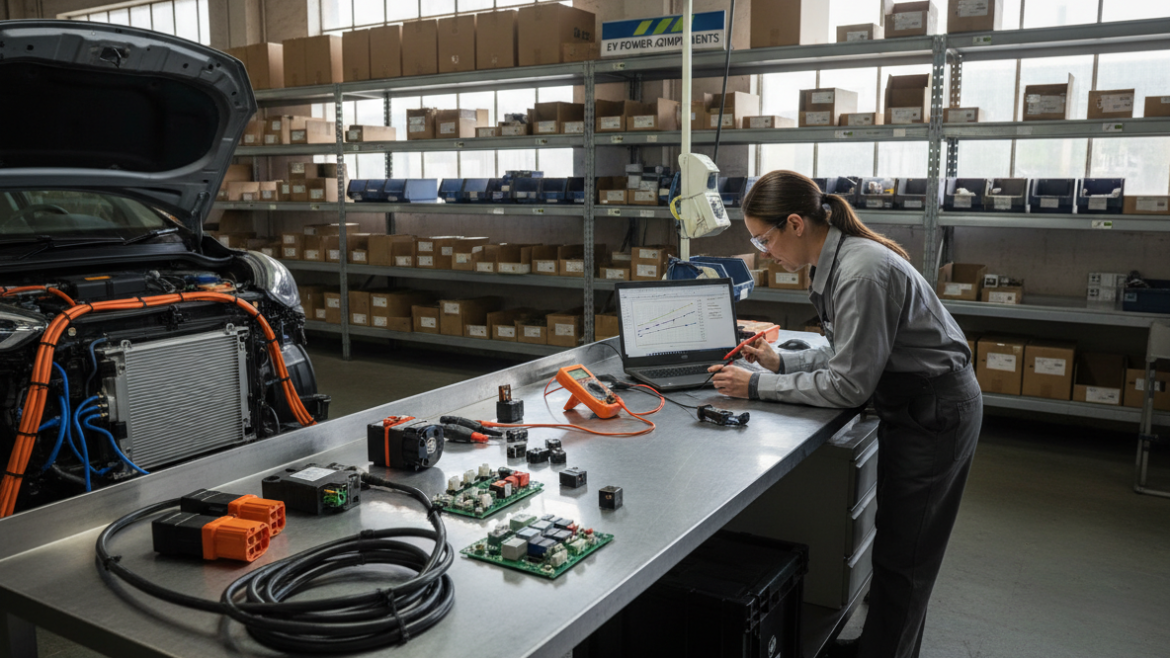
Artificial intelligence is no longer a future concept; it is already influencing how product demand is forecasted and how vehicles are diagnosed – particularly when it comes to electrical faults which can often be difficult to trace manually.
Whilst it’s still very much in its infancy, the potential impact of AI diagnostics is practical, measurable and increasingly difficult to ignore, so let’s delve a bit further:
Smarter Diagnostic Interpretation
Traditional diagnostics rely heavily on fault codes and whilst they definitely help to narrow down the search, a fault code alone rarely tells the full story.
For example, an ABS warning light may generate a wheel speed sensor fault but the root cause could be one of many things:
• A loose connection
• Corrosion on the electrical connector
• Damaged ABS ring
• Low brake fluid level
• Complete sensor failure
AI-assisted diagnostic platforms are able to swiftly analyse live vehicle data streams by interpreting: signal patterns, voltage irregularities and frequency deviations which could greatly reduce diagnostic times, increasing efficiency.
Predictive Failure Modelling
One of the most significant developments in AI within the automotive sector is predictive diagnostics.
Machine learning systems analyse historical repair data across thousands of vehicles and over time, they are able to identify patterns such as:
• Intermittent ABS sensor dropouts before total failure
• Gradual MAF sensor signal drift
• Ignition coil misfire patterns under load
• Relay contact degradation linked to thermal cycling
Instead of just reacting to complete failure, mechanics will be able to easily identify early warning signs and as the average vehicle age continues to increase, predictive modelling will become even more relevant in managing ageing electrical systems.
Inventory Forecast Optimisation
AI is not just limited to diagnostics, it is also reshaping distribution and stock control with advanced tools that are able to analyse:
• Regional sales data
• Seasonal demand fluctuations
• Vehicle age demographics
• Failure rate trends
• Weather-related demand shifts
This creates the potential to automate stock forecasting, reducing the need for manual analysis and combatting common challenges such as running out of stock of fast-moving parts and having capital tied-up in dead stock.
The Strategic Outlook
AI in the automotive industry is not about replacing real people, it’s working to streamline basic processes and take the legwork out of the more tedious & repetitive tasks which will allow us to focus our efforts on other things.
As vehicles continue to integrate advanced electronics, automated data-driven interpretation will become a standard practice rather than competitive advantage. Businesses that understand this shift and align their strategy accordingly will be better positioned for growth.
This shift towards AI-driven analysis & diagnostics highlights the need for high-quality auto electrical products, if you’re in the market for these then feel free to contact us at sales@currentcare.co.uk or 01254 300 730 and our team will be happy to help!